
Build Language
Thousands of meaningful conversations through narrated stories and discussion prompts.
Early Learning Library · Birth to five
A family-centered digital library that helps early learning organizations build language, literacy, and reading habits—at school, at home, and wherever learning happens.
Human-narrated children’s books connect educators, children, and families through meaningful reading, not digital entertainment. Developed with the University of Delaware.

Before kindergarten, countless moments shape a child’s relationship with language, books, and learning: a conversation over a picture book, a new word, a bedtime story, a child asking “Why?”
The Early Learning Library helps early childhood organizations turn those everyday moments into meaningful literacy experiences, because early literacy begins with families.
Thousands of meaningful conversations through narrated stories and discussion prompts.
Parents can read anytime, anywhere, with offline access—even if they lack confidence reading aloud.


Vocabulary and comprehension through sequencing and learning activities.
Kids build confidence by exploring books at their own pace and of their own choice.

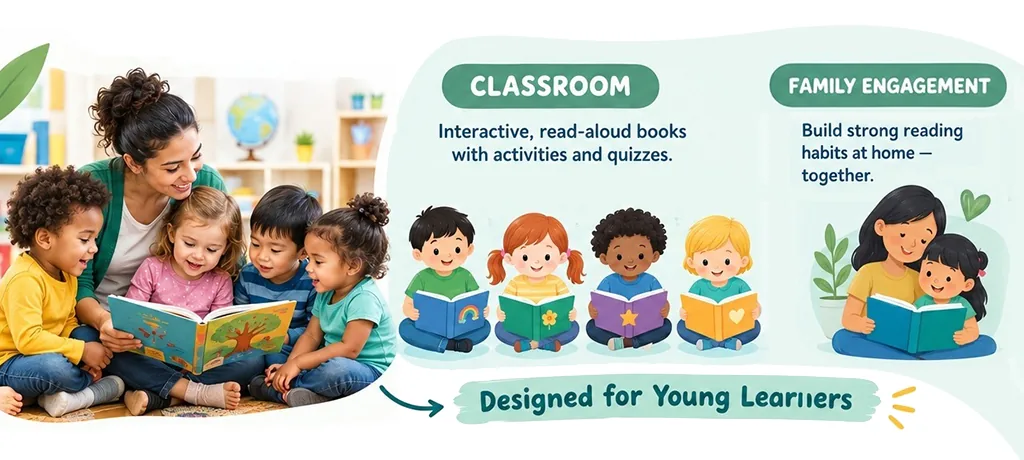
Most digital children’s resources are built for a child to use alone. This one connects the program to the child’s most important learning environment: home.
| A common digital-learning model | Smart Kidz Club approach |
|---|---|
| Child-focused | Child + family focused |
| Primarily screen-based | Reading-centered |
| Designed for individual use | Designed for shared reading |
| Digital entertainment features | Books and meaningful engagement |
| Classroom OR home | Classroom + home connection |
| Content access | Content + family engagement |
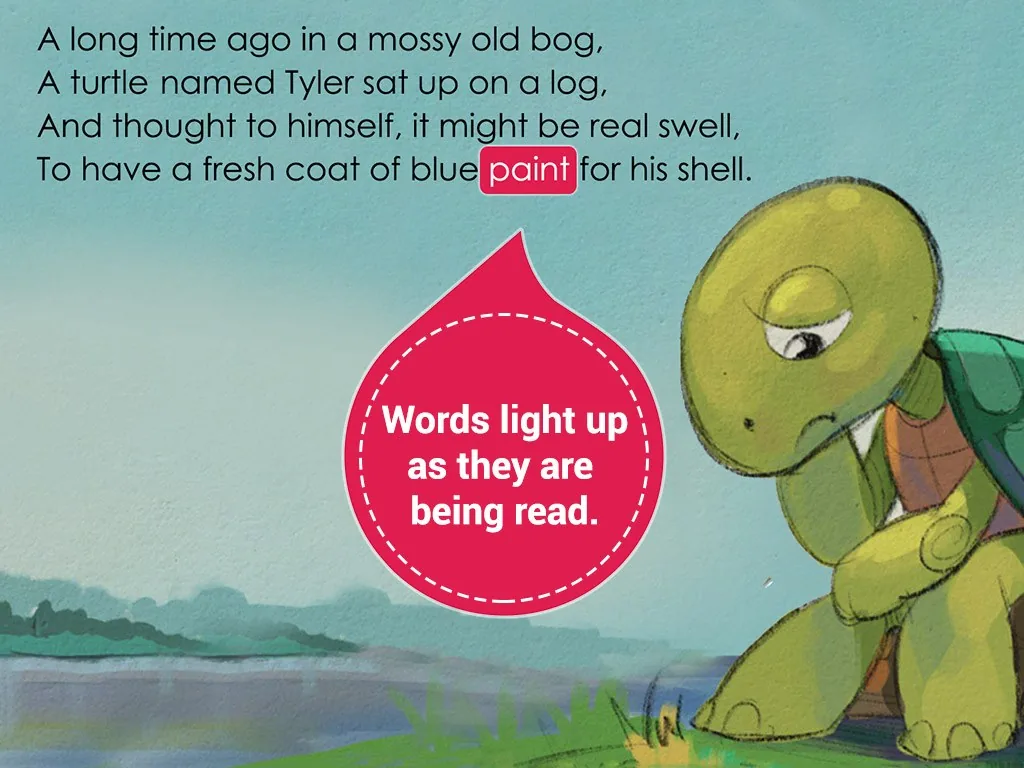
Hear a story brought to life through human narration.
Look at words and pictures and talk about what’s happening.
Use prompts to build vocabulary, comprehension, and storytelling.
Discover new ideas through knowledge-rich books.
Turn small moments into regular reading routines.
Technology should help children experience books, not compete with them.
The goal isn’t to keep children on the screen. It’s to bring children and families closer to books.
Foundational skills that develop between birth and five—built through vocabulary, listening and story comprehension, sequencing, narrative development, conversation, and early book awareness.
Children also build knowledge by reading about animals, nature, science, people and communities, everyday life, and imagination. Read to learn. Learn to read. For multilingual communities, narrated reading supports families who may not feel confident reading English aloud. The goal is not to replace the caregiver; it’s to make it easier for the caregiver to participate.
Extend classroom literacy into the home with a shared reading resource.
Reinforce classroom learning as children explore books with families.
Make meaningful reading available across different care environments.
Give caregivers an accessible tool for reading and language routines.
Bring family literacy resources to the communities you serve.
Add a practical digital reading component to school-readiness and parent-engagement efforts.
Multilingual families · Families learning English · Caregivers less confident reading aloud · Families with limited access to children’s books · Busy families · Grandparents and extended-family caregivers · Children preparing for preschool or kindergarten.
Smart Kidz Club worked with researchers at the University of Delaware and education stakeholders on one question: how can digital technology expand access to early literacy while strengthening the bond between educators and families?
What began as a pilot with early childhood partners, including Head Start programs, is now available to centers, childcare programs, nonprofits, libraries, and communities serving children from birth to five.
Access is only the beginning. The program provides access, the educator creates the connection, the family continues the experience, and the child grows through repeated chances to read, listen, and talk.
Establish your organization, classrooms, educators, and participating families.
Show educators how to assign books, encourage reading, and monitor engagement.
Introduce parents and caregivers to the library and how to use it with children.
Encourage shared reading, listening, conversation, and learning at home.
Use engagement insights to sustain the program, with optional technical and implementation support.
A digital children’s book library for ages 0–5 that connects educators, children, and families through narrated books and literacy-focused activities.
Early learning centers, preschools, childcare and daycare programs, family child care providers, nonprofits, libraries, community organizations, and birth-to-five initiatives.
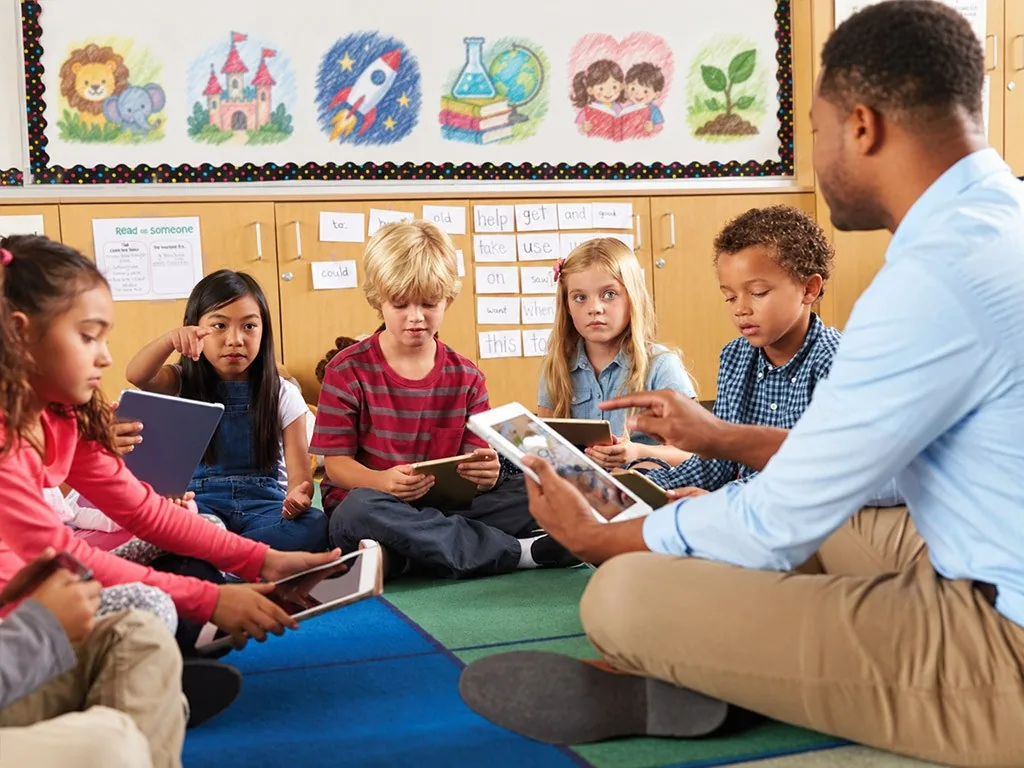
Educators introduce and assign books while families keep reading and listening together at home.
Yes. Human narration is central, so children hear fluent reading while following the book.
It can help families learning English or less confident reading English aloud: children hear spoken English while families participate together.
Yes. Educators can assign books, encourage reading at home, and use reading activity to support instruction.
No. It was piloted with partners including Head Start, but it’s now intended for a much broader audience of early learning organizations.
Smart Kidz Club collaborated with the University of Delaware to develop and study a research-informed resource supporting early literacy, language, phonological awareness, and family engagement.
Contact Smart Kidz Club to discuss your population, program model, number of children and families served, and goals.
Yes. Teachers can monitor individual student and class-wide reading activity, including books read, time spent reading, reading levels, book categories, and completion of assigned books. Educators can view overall class engagement as well as detailed progress for each student. Teachers can also monitor the class leaderboard, where Smart Coins earned through app activity and engagement recognize student participation and encourage reading.
Together, we can help more children enter school with stronger language, richer experiences with books, and a growing love of learning.
Tell us about your program and the families you serve.
Looking for elementary learning? See Classroom K–5.